





When the White House starts leaking, it usually means something is wrong. And the latest round of leaks reveals that Trump officials are fearing the worst about where the administration’s foreign policy is headed.
After Russian forces, on orders from President Vladimir Putin, invaded Ukraine in February 2022, JD Vance famously declared, “I don’t really care what happens to Ukraine one way or another.” He added that he was “sick of Joe Biden focusing on the border of a country I don’t care about while he lets the border of his own country become a total war zone.”
At the time, Vance was playing directly to the isolationist “America First” base of the MAGA movement. He was a true believer in keeping the United States out of foreign conflicts, and he was not shy about saying so.
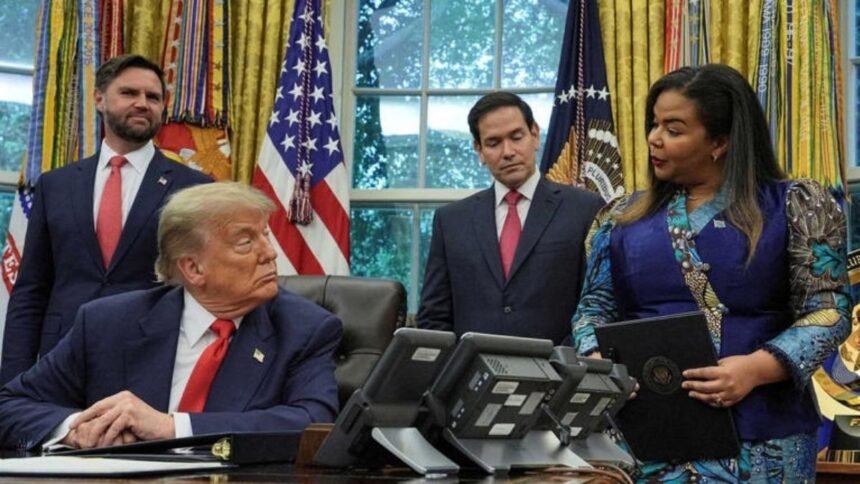
But now, as vice president, the Hillbilly Elegy author and former U.S. senator is publicly cheerleading President Donald Trump’s interventionist decisions on Iran and Venezuela. The public image and the private reality, however, tell very different stories.
According to Politico sources, Vance privately expressed strong reservations about going to war with Iran. Behind closed doors, the vice president made his opposition known long before any bombs were dropped.
In an article published on Friday morning, March 13, Politico reporters Diana Nerozzi and Eli Stokols reported that Vance was “skeptical of the U.S. striking Iran in the leadup to President Donald Trump’s decision to launch the war.” Two senior Trump officials confirmed this account. The report noted that Vance “has long questioned U.S. intervention abroad” even while publicly defending the Iran operation.
One senior Trump official, who spoke on condition of anonymity, told Politico that Vance was “skeptical,” “worried about success,” and simply “just opposes” going to war against Iran. That is a sharp contrast to his public posture of full support.
A second Trump official offered a more diplomatic framing of Vance’s role inside the West Wing.
“His role is to provide the president and the administration, you know, all points of views of what could happen from many different angles,” the official told Politico. “And, you know, he does that. But once the decision has been made, he’s fully on board.”
This is not the first time Vance’s private views have leaked out of the White House. Earlier, when the U.S. bombed the Houthis, Vance reportedly wrote in a Signal chat that he believed the move was a “mistake.” The pattern of these leaks is hard to ignore.
Bloomberg News reporter Matthew Yglesias did not ignore it. He was quick to respond to Politico’s reporting with a pointed observation about what these leaks say about the broader state of the administration.
In a March 13 post on X, Yglesias wrote, “This kind of leaking suggests a White House team that knows things aren’t going to get better soon.” That single line captured a lot of what political observers had already been sensing.
Journalist Will Fritz also weighed in, drawing a direct comparison to a very recent political cautionary tale.
“Vance should know from the extremely recent example of Kamala Harris that no one cares how much you privately disagreed with the president,” Fritz wrote on X. “Your administration’s actions will be tied around your neck for the rest of your political career.”
That warning carries real weight in Washington right now. Even President Trump himself acknowledged the divide, telling reporters at Mar-a-Lago that Vance was “philosophically a little different” but “still quite enthusiastic.” The public split, no matter how carefully managed, is now very much on the record.
What makes this moment so significant is not just what Vance thinks about Iran. It is what these leaks reveal about a White House under pressure. When senior officials start talking to reporters anonymously about their own vice president’s doubts, it signals deeper anxiety inside the West Wing. And that anxiety, it appears, is growing.