







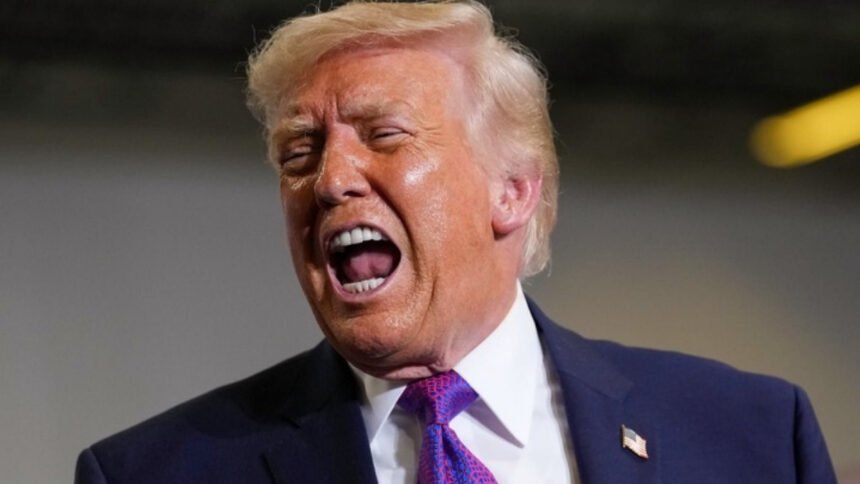
Donald Trump has backed himself into a corner in the Strait of Hormuz, and he knows it. The question everyone is asking now is not whether he is cornered, but what exactly he plans to do next. Every option he has carries serious risk, and the clock is ticking.
Iran’s new supreme leader, Mojtaba Khamenei, made his position clear in his very first official statement. He vowed that Iran will continue to block the Strait by targeting oil tankers trying to pass through. There are also credible reports that Iran may be laying mines in the waterway.
The consequences for the global economy have been swift and severe. The International Energy Agency has called this “the largest supply disruption in the history of the global oil market.” Oil prices have surged to $100 a barrel, and gas at the pump has jumped nearly 20 percent since the war began.
The pain is spreading beyond fuel. Higher energy costs are now pushing up prices for food, medicine, electricity, and airline tickets. The stock market continues to slide. Americans are feeling the pressure in their wallets every single day.
Trump knows that this economic damage could cost Republicans Congress in the midterm elections. That political reality makes this crisis personal for him, not just strategic. He needs a way out, and he needs one fast.
Four possible paths forward have been on the table since this standoff began. Each one comes with its own serious set of problems.
The first option is to declare victory and pull out of the Middle East within days, even with the Strait still blocked. The hope would be that Iran reopens it voluntarily to sell its own oil. But if fuel prices stay high and Trump has nothing real to show for the war, Republicans will almost certainly pay a brutal price with voters in November.
The second option is to escort oil tankers through the Strait using American warships, then declare victory and leave. This sounds straightforward, but the Pentagon has been resisting it. Navy officers have warned that Iranian drones and anti-ship missiles could turn the narrow passage into what they are calling a “kill box” for American sailors.
The third option is to spend the next two weeks aggressively targeting what remains of Iran’s missile systems, drone capabilities, and naval forces. The goal would be to neutralize Iran completely before declaring victory. But Iran has shown a stubborn ability to keep fighting even after suffering significant losses, which means this plan carries no guarantees.
The fourth option involves a global energy workaround. Trump could push Russia, Venezuela, and Gulf allies to dramatically increase oil production and ease price pressures on the American economy. The problem is that OPEC surplus capacity is limited, Venezuelan output cannot scale up quickly, and Russia is already selling most of its oil to China and India. The Department of Energy has warned that gas prices are unlikely to return to pre-war levels before mid-2027.
Nearly 6,000 readers weighed in on which path Trump would take. Forty-two percent believed he would choose the first option and declare a quick, hollow victory. Thirty-two percent thought he would keep bombing Iran for at least two more weeks. Just six percent believed he would attempt to physically escort tankers through the Strait.
But events are now moving faster than anyone expected. It appears Trump is moving toward that very option most people thought he would never choose.
Trump has said that escort operations will begin “very soon.” In a pair of social media posts, he has called on other nations to send warships and help keep the Strait of Hormuz open. The response from allies so far has been muted, with no firm commitments on the table.
Trump backed himself into this corner through decisions that led here. Now, with global energy markets in crisis and the midterms on the horizon, the world is watching to see if there is actually a way out.