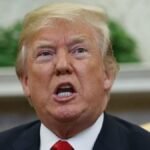

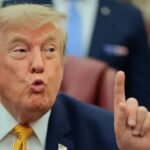


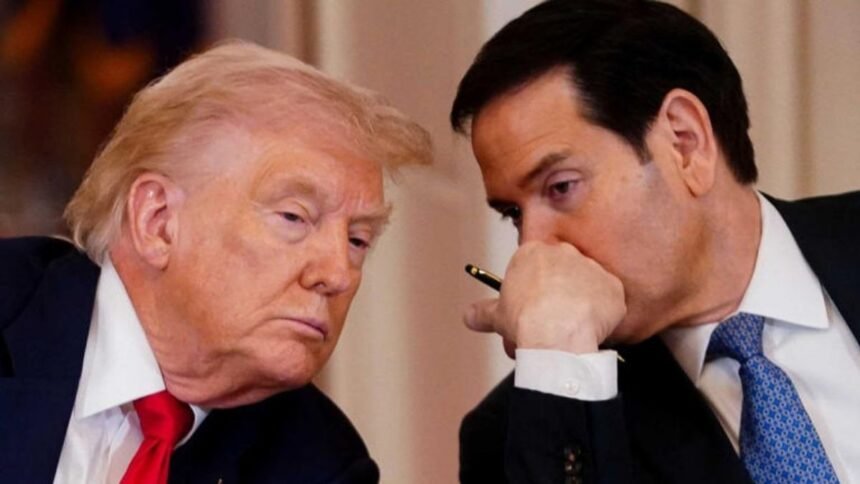
President Donald Trump and his top allies, including Defense Secretary Pete Hegseth, insist that Operation Epic Fury is going exactly as planned. But behind closed doors, some of the president’s own allies are no longer holding that card. A growing number of Washington insiders fear Trump walked into a war he may not be able to walk out of.
When U.S. forces began firing Tomahawk missiles at Iran late last month, many of Trump’s allies believed it would be a fast and clean operation. They were reassured by the idea that Trump’s open-ended objectives gave him the freedom to declare victory whenever he chose. More than two weeks into the conflict, those same allies are no longer so sure.
Politico’s Megan Messerly reported on March 17 that some Trump allies now believe “the president no longer controls how, or when, the war ends.” That is not a small concern. That is a warning signal from people inside the president’s own circle.
Iran has responded to the U.S. campaign by targeting oil tankers in the Strait of Hormuz, the narrow waterway that carries roughly one-fifth of the world’s oil supply. The attacks have already rattled global crude markets. Oil prices have surged from under $70 per barrel to nearly $100 per barrel since the conflict began, and the national average price for gasoline has climbed to $3.70, up about 25 percent in just one month.
Those numbers are not just economic data, They are political time bombs for a White House already facing voter frustration over the cost of living and the approaching midterm elections.
One Trump White House source, speaking anonymously to Politico, put it bluntly. “We clearly just kicked [Iran’s] ass in the field,” the source said, “but, to a large extent, they hold the cards now.”
That same source continued: “They decide how long we’re involved, and they decide if we put boots on the ground. And it doesn’t seem to me that there’s a way around that, if we want to save face.”
A second source described by Messerly as someone “familiar with the U.S. operation in Iran” was equally direct. “The terms have changed,” the source told Politico. “The off-ramps don’t work anymore because Iran is driving the asymmetric action.”
That source added a warning that cuts to the heart of the crisis: “For the White House, now the only easy day was yesterday. They need to worry about an unraveling.”
The unraveling the source warned about may already be visible. The U.S. has moved the amphibious assault ship USS Tripoli, carrying the 31st Marine Expeditionary Unit, into the region. That deployment places roughly 2,000 Marines within striking distance of the conflict, capable of launching limited ground operations. For Trump’s “America First” allies, that is exactly the kind of mission creep they feared.
The Atlantic’s Jonathan Lemire, appearing on MSNBC’s “Morning Joe” on March 17, argued that Iran, even in its weakened state, could still be more dangerous than Trump expects. From choking off oil flow through the Strait of Hormuz to the risk of terrorist attacks inside the United States, the threats on the table are serious and wide-ranging.
The opening U.S. strikes killed Iran’s supreme leader, Ayatollah Ali Khamenei, along with dozens of senior commanders and members of his family. Now, his son Mojtaba Khamenei leads the regime. One Trump ally told Politico plainly: “You killed his dad and his wife. Do you think he’s gonna be more, or less, reasonable?”
The White House continues to push back. Spokesperson Anna Kelly said Trump “knew full well that Iran would try to stop the freedom of navigation,” and insisted the president has already taken action to destroy over 30 minelaying vessels. She called the operation a “tremendous success.”
Still, Trump’s own approval rating has dropped from above 50 percent at the start of his term to around 40 percent now. One source warned that putting boots on the ground could drag that number toward the levels seen during Nixon’s Watergate scandal, when approval hit roughly 25 percent. “He’s seen that story before,” the source said, “and I think he knows how that plays out politically.”
The question now is whether knowing how the story ends is enough to stop it from playing out that way.