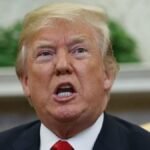



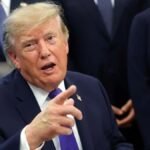

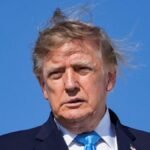

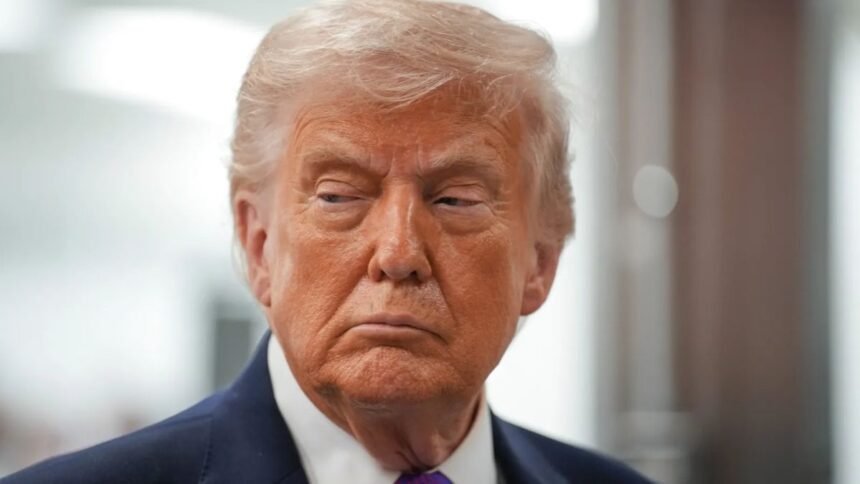
President Donald Trump is now facing what CNN’s chief polling analyst has called the single “most troublesome sign” he has ever seen for both the president and the Republican Party. The disapproval is not a blip. It is historic, and it is spreading. And the all-time high in negative ratings is being driven by the two issues that have always been Trump’s strongest ground: the economy and the cost of living.
A new Yahoo/YouGov survey found Trump’s net approval rating on the economy has now fallen to minus 29. According to Yahoo, that is the lowest economic approval score this specific polling series has ever recorded for Trump. It is worse than any number measured during the peak of the COVID-19 pandemic in his first term.
The cost of living numbers are just as alarming. Only 26 percent of Americans said they approve of how Trump is handling rising prices, while 67 percent said they disapprove. That disapproval figure is also a record low for Trump on that issue within this polling series.
Overall job approval in the same poll stood at just 38 percent, with 59 percent of respondents saying they disapprove of the job Trump is doing. These numbers reflect a broader pattern that has held steady for months, not just a single bad week.
CNN polling analyst Harry Enten put it bluntly on X, writing: “This is the most troublesome sign I’ve seen for Trump & the GOP. Trump’s now a record low 41 pts underwater on the cost of living per Yahoo/YouGov. He’s 60 pts underwater on the issue with indies!! Wave adios to the House & maybe Senate cause you can’t win with these numbers.”
That warning about Independent voters is especially significant. Independents were central to Trump’s 2024 election win. Losing them by 60 points on cost of living is not a minor polling fluctuation. It is a serious structural problem.
What makes these numbers more troubling for the White House is their persistence. Polling analysts say a single dip can be explained away, but sustained negativity across multiple firms and multiple issue areas is a different story. Trump’s net approval has remained negative for a full year, according to Enten’s aggregate of polling data, suggesting something deeper than a temporary bump in the road.
The anxiety is not limited to the economy alone. Trump’s numbers have declined across immigration, foreign policy, inflation, and gas prices. In the same Yahoo/YouGov survey, his net approval on gas prices stood at minus 39. Just 16 percent of respondents said inflation is getting better, while 61 percent said it is getting worse.
Kevin Thompson, CEO of 9i Capital Group and host of the 9innings podcast, told Newsweek that the current political and economic climate creates an unavoidable feedback loop. “The President does not like bad press, and with the cost of living moving higher due to tariffs, and now self-induced US/Israel War, it is a foregone conclusion that it will get much worse before it gets better,” Thompson said.
Thompson added that economic blame tends to stick to whoever holds the office. “Much like Biden had to wear the supply chain and pandemic inflationary pressures, they will get the blame. The real issue is that much of this is by our own doing, not economic,” he said.
Trump himself has taken a dismissive stance toward the polling data. In remarks to the New York Times about his approval numbers as they relate to the Iran War, Trump said: “I think that the polling is very good, but I don’t care about polling. I have to do the right thing. This should have been done a long time ago.”
The White House has also pushed back, with spokesman Davis Ingle stating that “the ultimate poll was November 5, 2024, when nearly 80 million Americans overwhelmingly elected President Trump.” That framing may hold weight with the Republican base, but it does little to address the concerns of Independent and working-class voters who are now slipping away.
Heading into the 2026 midterm elections, the numbers carry real political weight. Trump is not on the ballot, but his approval ratings will directly shape Republican turnout, fundraising, and candidate strategy in competitive congressional districts. Low enthusiasm among Independents, combined with high economic anxiety, is exactly the kind of environment that produces wave elections.
Thompson offered a note of caution for Democrats tempted to celebrate too early. “For many Democrats it is not time to take a victory lap, as Trump’s approval rating among his base remains high,” he said. Republican loyalty has not collapsed. But the broader electorate, especially the swing voters who decide close races, is sending a very clear and very consistent signal.
The question now is whether the White House will change course on the policies driving that signal, or whether it will continue to dismiss the polls entirely and hope the numbers eventually turn around on their own.