


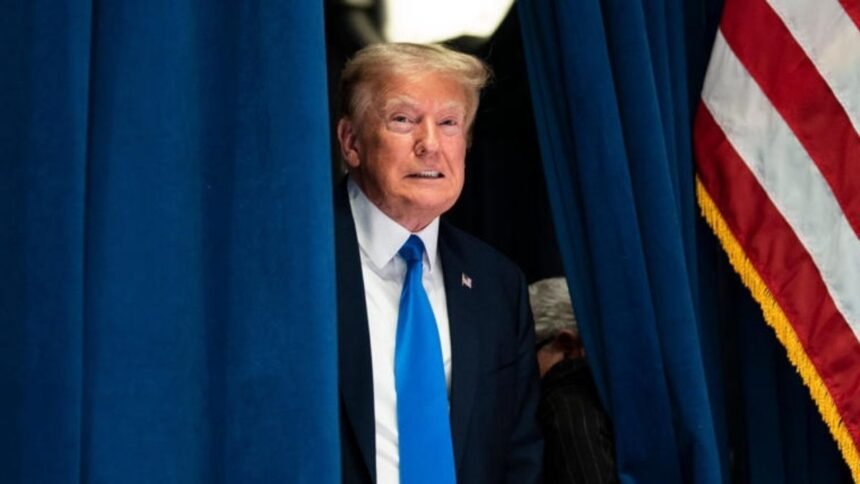
Donald Trump said the whole world would fall in line. Instead, the whole world just kept moving. Several cargo ships completely ignored his blockade of the Strait of Hormuz, openly defying the U.S. Navy within hours of the blockade taking effect. For a president who built his entire brand on projecting power and dominance, the humiliation could not have been more public or more damaging.
Multiple Iran-linked tankers transited the vital waterway almost immediately after the blockade began on Monday. That group included sanctioned vessels and a Chinese-linked tanker that sailed through as if the U.S. military presence simply did not exist. The ships were tracked by independently verified shipping data, leaving absolutely no room for doubt about what had happened in real time.
The U.S. Central Command pushed back hard against the reports circulating online and in the press. Officials insisted that no ships had bypassed the blockade during the first 24 hours of its operation. They also confirmed that 10,000 U.S. sailors, Marines, and airmen were deployed, along with over a dozen warships and dozens of aircraft supporting the mission.
That official claim, however, sat in direct contradiction with what the independently verified tracking data clearly showed. The vessels passed through the Strait during the blockade window. The data was publicly available and there for anyone in the world to see.
Trump had announced the blockade on Sunday via Truth Social, framing it as an urgent and necessary act of national strength against Iran. “Effective immediately, the United States Navy, the Finest in the World, will begin the process of BLOCKADING any and all Ships trying to enter, or leave, the Strait of Hormuz,” he wrote, accusing Iran of “world extortion.” It was a bold declaration, made in all capital letters, that quickly became a source of global embarrassment.
The blockade officially started at 10 a.m. on Monday, just one day after Trump’s announcement on social media. It came after U.S.-Iran peace talks in Islamabad collapsed over the weekend, raising serious and immediate fears of a wider military escalation in the region.
Around 20 percent of the world’s oil normally flows through the Strait of Hormuz, making it one of the most strategically important waterways on the planet. But the waterway had already been largely at a standstill since Trump launched his military campaign against Iran on February 28. That prolonged shutdown had already triggered a deepening global oil crisis and sent gas prices climbing steadily across the United States.
The financial damage from the blockade was felt almost immediately on global markets. Brent crude, the global oil benchmark, jumped 7 percent to $102 a barrel on Monday alone. The national average gas price climbed to $4.12 a gallon, according to AAA Gas Prices, meaning American families at the pump were already feeling the economic squeeze long before any resolution was in sight.
On Tuesday, the economic pain spread even further than energy markets. The International Monetary Fund released a stark and urgent warning, saying that disruptions to global oil markets could slow economic growth, drive inflation significantly higher, and increase the very real risk of a worldwide recession. It was one of the most serious and pointed economic alerts the IMF had issued in years, and it landed like a second blow on an already rattled global economy.
“The global outlook has abruptly darkened following the outbreak of war in the Middle East,” wrote Pierre-Olivier Gourinchas, the IMF’s chief economist, in the organization’s formal report. “The war interrupted what had been a steady growth trajectory.” Those two sentences alone said everything about how quickly the situation had deteriorated on the world stage.
Foreign policy experts warned loudly that the situation could get significantly worse before it got better. Trita Parsi, executive vice president at the Quincy Institute for Responsible Statecraft, said Iran had multiple serious ways to retaliate against the U.S. blockade. One of the most damaging options on the table was closing the Strait of Aden, another critical global shipping lane that carries a massive share of international oil and trade.
“This would take another 12 percent of global oil flow away from the global markets and it would push up oil prices dramatically,” Parsi said in a briefing call with The Daily Beast. “Anything at this point that takes further oil away will, of course, push up oil prices in a manner that would be devastating for Trump.” His warning made clear that the consequences of miscalculation were not abstract but immediate and measurable.
Iranian officials added another sharp layer of tension to an already volatile situation. They accused the U.S. of breaking the existing ceasefire agreement by allowing Israel to continue bombing and conducting a ground invasion in Lebanon. That accusation framed the blockade not just as economic pressure but as a direct violation of the fragile truce the two sides had previously reached.
In a bid to ease some of the building diplomatic pressure, Israeli and Lebanese officials held rare direct talks in Washington on Tuesday, overseen by Secretary of State Marco Rubio. The meeting was historic in the sense that direct communication between the two sides almost never happens at this level. Rubio called it “a historic opportunity” before the talks began, while also acknowledging that “we understand we’re working against decades of history.”
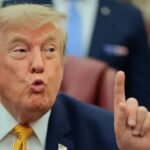
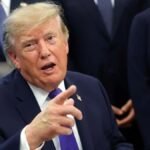
Trump, meanwhile, claimed publicly that Iran had reached out to the United States asking for another round of nuclear and security negotiations. He declined, however, to say whether Washington had actually agreed to sit back down at the table. “We’ve been called by the other side,” he told reporters gathered outside the Oval Office. “They’d like to make a deal very badly.”
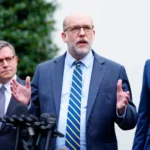
Experts who had dealt directly with Iran in past administrations were far less optimistic about where things were heading. Robert Malley, who served as the lead U.S. negotiator in the landmark 2015 Iran nuclear deal and later as a special envoy for Iran under President Biden, offered a sobering and wide-ranging assessment of the possible outcomes. “Talks could go on as some are suggesting, war may resume, the impasse may persist, President Trump could walk away or there could be military escalation,” he said plainly.
“Any of the above is anyone’s guess because it lies in President Trump’s erratic hands.” That single sentence captured what so many analysts and world leaders were quietly thinking but few were willing to say out loud. The uncertainty was not just about Iran. It was about whether Trump’s approach to foreign policy could be trusted to hold together at all.
The ships kept moving. The world kept watching. And for now, at least, the blockade that Trump promised would change everything appears to have changed very little, while the economic and diplomatic costs for the United States continue to quietly grow with each passing day.