







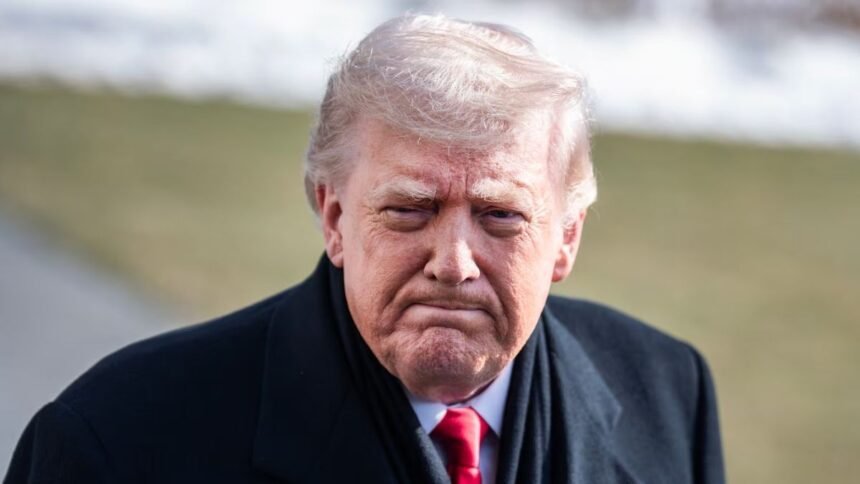
The Trump administration has abruptly canceled an $11 million federal contract with a Catholic charity that houses and cares for migrant children. The move comes squarely in the middle of President Donald Trump’s escalating feud with Pope Leo XIV, the leader of the Catholic Church. Many observers are now asking whether punishing the pope’s institutional church is exactly what the White House intended. The church fired back quickly, and things have gotten ugly fast.
Catholic Charities of the Archdiocese of Miami has spent more than 60 years providing vital services to unaccompanied migrant children in South Florida. The organization’s work stretches back to the early 1960s, when it helped resettle thousands of Cuban children airlifted to the United States during Operation Pedro Pan. Now, after the administration yanked its funding, the charity says it could be forced to shut down within three months.
The $11 million contract was administered through the Office of Refugee Resettlement, part of the federal Department of Health and Human Services. Catholic Charities used this funding to operate a full-service child welfare program, including shelters, foster homes, and family reunification services. The federal government first reached out to the charity in late March about the proposed cancellation.
A spokesperson for the department said the decision reflected a “significantly lower” number of unaccompanied migrant children in federal care. Under the Trump administration, that number stands at roughly 1,900 children, compared to a peak of around 22,000 during the Biden administration. The department framed the contract cancellation as a consolidation of unused capacity.
But Miami’s Archbishop Thomas Wenski did not accept that explanation quietly. Writing in the Miami Herald, Wenski called the decision “baffling” and argued that the government would be “hard-pressed to replicate” the level of care that Catholic Charities has built over six decades.
“The Archdiocese of Miami’s services for unaccompanied minors have been recognized for their excellence and have served as a model for other agencies throughout the country,” Wenski wrote.
He continued: “Our track record in serving this vulnerable population is unmatched. Yet, the Archdiocese of Miami’s Catholic Charities’ services for unaccompanied minors has been stripped of funding and will be forced to shut down within three months.”
The timing of the funding cut has drawn immediate scrutiny. Trump has been locked in a bitter, very public feud with Pope Leo XIV over the U.S. war in Iran and the administration’s immigration policies. Leo, the first American-born pope, has repeatedly spoken out against the bombing campaign in Iran, calling it a moral failure. Trump responded by attacking the pope directly, saying Leo was “WEAK on Crime, and terrible for Foreign Policy.”
The president has also refused to apologize to the pontiff. Trump told reporters there was “nothing to apologize for,” insisting the pope “said things that are wrong.” The feud has now stretched across multiple news cycles and shows no signs of cooling down.
The controversy deepened even further when Trump shared an AI-generated image on social media depicting himself in the likeness of Jesus Christ, wearing robes and healing a sick man. The backlash was swift and fierce, coming from religious communities and political critics alike. Trump later deleted the post and claimed he thought the image was showing him as a doctor.
The human cost of this political battle is falling on vulnerable children. It remains unclear what will happen to the migrant children currently living in Catholic Charities facilities if the Miami-based organization is forced to close. The organization operates an 81-bed shelter named after Monsignor Bryan O. Walsh, an early champion for refugee children, along with a network of foster homes across the region.
Robert Latham, associate director of the Children and Youth Law Clinic at the University of Miami Law School, warned that any forced relocation could cause serious psychological harm. He noted that many of these children have already endured enormous loss and trauma before arriving in the United States.
“It’s incredibly psychologically harmful to be moved,” Latham said, comparing the stress to experiencing a serious illness or the death of a family member.
“For little kids, moving repeatedly creates bonding issues and destroys the sense of both self and community. They don’t know who they are and where they will be from day to day,” he told the Miami Herald.
Experts say rebuilding what Catholic Charities has created would not happen overnight. Esther Jacobo, director of Citrus Family Care Network in Miami-Dade, estimated it would take three to six months at minimum for any new agency to get a child welfare program properly licensed and staffed. Foster parents must be recruited, trained, screened, and approved before a single child can be placed.
The broader backdrop to this story carries deep historical weight. The Catholic Church’s relationship with unaccompanied immigrant children in South Florida dates back more than 60 years. Operation Pedro Pan alone rescued an estimated 14,000 Cuban children, many of whom grew up to become prominent doctors, lawyers, and civic leaders. Former U.S. Senator Mel Martinez was himself a Pedro Pan child.
Archbishop Wenski put it plainly in his op-ed: “The positive impact of this cooperation between the federal government and Catholic Charities can be readily seen in the lives of former Pedro Pan children who, through this intervention, grew up to be successful members of our communities.”
The Daily Beast has reached out to Catholic Charities, the Department of Health and Human Services, and the White House for comment. None had responded at the time of publication. Meanwhile, the children caught in the middle of this feud are still waiting to find out where they will go next.