







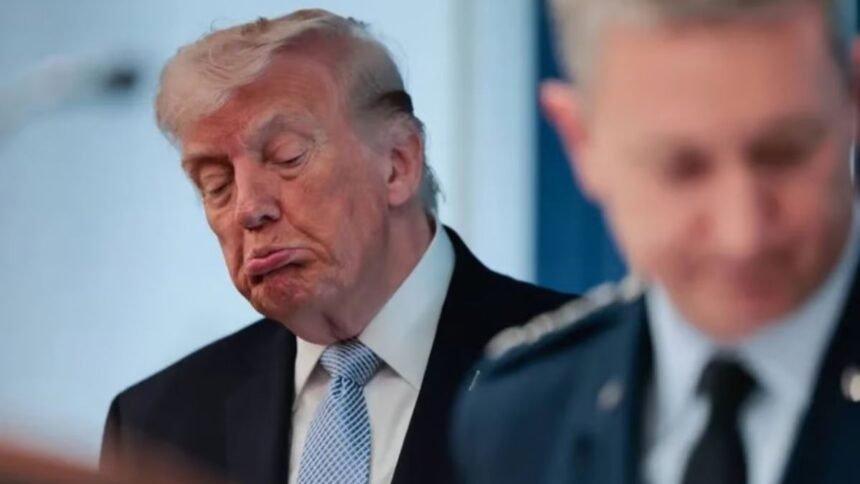
A sitting United States president reportedly tried to access America’s nuclear launch codes during a closed-door emergency White House meeting. A four-star general rose from his seat, stood firm, and delivered one word in response: “No.” That single act of defiance, if the reports are accurate, may have stopped the world from lunging toward catastrophe.
The claim comes from retired CIA analyst Larry Johnson, who made the explosive allegation on the YouTube program Judging Freedom. Johnson stated that during a high-stakes Saturday emergency meeting, President Donald Trump moved to access the nuclear codes. What followed, Johnson says, was a confrontation that left the room in complete shock.
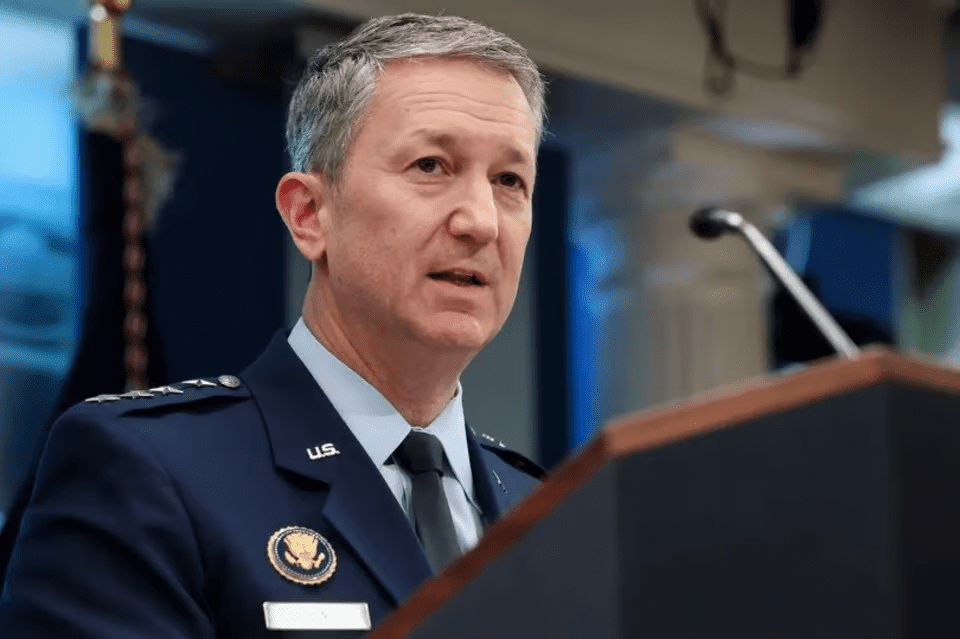
“One report coming out of that meeting at the White House is that Trump wanted to use the nuclear codes, and General Dan Caine stood up and said ‘No,'” Johnson recounted on the program. “He invoked his privilege as the head of the military, so to speak. It was apparently quite a blow-up.”
Johnson did not stop there. “There are some very bizarre things going on in DC,” he added, describing the atmosphere inside the White House as deeply unsettled. His words landed like a warning flare on a night when the rest of the country was largely unaware anything had happened at all.
General Dan Caine, the Chairman of the Joint Chiefs of Staff, reportedly invoked his authority as the nation’s top military officer to shut down the request on the spot. Internal reports suggest that Caine then walked out of the meeting entirely, making his opposition impossible to ignore or dismiss. Neither Caine nor the White House has issued any official public statement addressing the confrontation directly.
The allegations remain unverified as of this writing. It is also unclear what specific purpose accessing the nuclear codes would have served at that particular moment in the conflict. However, that uncertainty has done little to calm the growing alarm among national security observers and foreign policy experts tracking the situation closely.
This is not the first time Trump’s conduct during the ongoing Iran conflict has raised serious red flags inside his own administration. Reports published just days earlier revealed that Trump was deliberately excluded from the Situation Room by senior military advisors during a critical Iran rescue operation. The stated reason was direct and alarming: officials feared that his volatile temperament could derail the entire mission before it had a chance to succeed.
According to the Wall Street Journal, senior administration officials chose to give Trump updates only at select “meaningful moments” during the operation, rather than allowing him real-time access to the tactical feeds being monitored by the National Security Council. Vice President JD Vance and Chief of Staff Susie Wiles monitored the operation remotely, while the Situation Room remained tightly controlled by military leadership. The president, effectively, was being managed like a variable that needed to be contained rather than a commander who needed to be informed.
The roots of this tension trace back to a deeply emotional reaction Trump had earlier in the month. After Iranian forces shot down a U.S. aircraft, Trump reportedly spent hours screaming at West Wing staff and was described as being tormented by vivid memories of the 1979 Iranian hostage crisis. He reportedly told aides, “If you look at what happened with Jimmy Carter, it cost them the election,” according to sources familiar with the private conversations inside the West Wing.
The broader conflict that has set all of this in motion began on February 28, when combined U.S.-Israeli airstrikes hit multiple strategic targets deep inside Iran. Iran responded with sweeping retaliatory strikes across the Middle East, pushing the entire region into turmoil and chaos. Iran also shut down the Strait of Hormuz, one of the world’s most critical shipping lanes, sending global energy markets into a violent and immediate spiral.
A temporary ceasefire is currently in place, but it is hanging by a thread with no clear path forward. President Trump has said publicly that it is “highly unlikely” he would extend the ceasefire agreement beyond its current deadline. With the clock ticking and no permanent peace deal in sight, the pressure building inside the White House is only growing more intense by the day.
Iran’s chief negotiator and parliament speaker, Mohammed Bagher Qalibaf, made Tehran’s position unmistakably clear in a post on X early Tuesday. “We do not accept negotiations under the shadow of threats,” he wrote plainly and without hesitation. He added that Iran has been preparing “to reveal new cards on the battlefield,” a phrase that carried the unmistakable weight of a direct and deliberate threat.
What makes all of this especially dangerous is Iran’s nuclear standing on the world stage. The country is not formally recognized as a nuclear-armed state, but is widely believed to possess advanced uranium enrichment technology that is fully capable of supporting nuclear weapons development. That fact alone transforms every escalation in this conflict into something with consequences that extend far beyond the borders of the Middle East.
No one in Washington has officially confirmed what happened inside that emergency room on Saturday. What is confirmed is that the United States is currently navigating one of the most dangerous and fast-moving military standoffs in modern history, with a ceasefire deadline rapidly approaching and peace talks teetering on the brink of total collapse. The space between a heated meeting and an irreversible, civilization-ending decision has never felt this dangerously narrow.
The world may have come closer to the edge than it will ever officially acknowledge or admit. And if the reports are true, it was a four-star general who stepped between that edge and everything that could have followed.