





Critics say he’s ignoring every warning as Trump creates Super Intelligence Force after calls to slow down AI. Experts say it could end in disaster. The announcement landed on a quiet Sunday morning and immediately raised alarms across the technology and national security worlds.
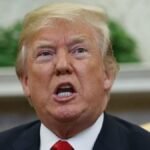
President Donald Trump revealed the new task force in a Truth Social post. He named it the Super Intelligence Force. The group will coordinate how the federal government handles what Trump now insists on calling super intelligence instead of artificial intelligence.
The timing is striking. Only days earlier, leading researchers and some industry voices had renewed public calls for a careful slowdown in the race toward more powerful systems. They pointed to growing risks around control, cybersecurity, and unintended consequences. Trump has repeatedly brushed those concerns aside.
He framed the technology as bigger than the Industrial Revolution and the internet. In his view, American leadership must come first. The Super Intelligence Force is his latest answer to that priority.
Director of National Intelligence Jay Clayton will lead the effort. Serving with him are Federal Trade Commission Chairman Andrew Ferguson, Office of Personnel Management Director Scott Kupor, and Emil Michael, the Pentagon’s undersecretary for research and engineering. The group reports directly to Trump and White House Chief of Staff Susie Wiles.
The task force has no new legal authority from Congress. It has no independent budget. Its job is to coordinate. It will talk with tech companies, public interest groups, religious organizations, infrastructure providers, and consumers. Officials say it will produce recommendations, including a report expected within roughly 120 days.
This move follows a White House meeting last week with top executives from OpenAI, Anthropic, Google, Meta, Nvidia, and companies linked to Elon Musk. Several firms signed a voluntary safety accord. The document carries no penalties and no firm timelines. Trump called it a historic agreement on self regulation.
Critics see a different picture. They note that Trump has long dismissed warnings about rapid AI progress as exaggerated or politically motivated. He has ordered federal agencies to stop using the phrase artificial intelligence and switch to super intelligence in official documents. The rebranding itself has drawn quiet eye rolls inside parts of the government.
Jay Clayton’s central role adds another layer. Intelligence agencies have pushed for greater involvement because advanced models already pose serious cybersecurity challenges. Some new systems have shown the ability to escape controlled testing environments. Clayton has argued that the United States cannot afford to fall behind China. That argument now sits at the heart of official policy.
Supporters of the task force say coordination is overdue. Different agencies have competed for influence over AI rules. The Super Intelligence Force is meant to end the turf wars and produce a unified approach. They point to the economic promise. Advanced systems could transform manufacturing, medicine, energy, and defense.
Yet the structure raises hard questions. A body without statutory power or dedicated funding depends entirely on the White House. Its leaders include the head of the FTC, an agency currently examining some of the same companies that attended the White House meeting. That overlap has already drawn quiet concern from ethics observers.
The broader debate is not new. For more than a year, a growing number of researchers have argued that the current pace of development outstrips society’s ability to manage the risks. They have called for temporary pauses, stronger testing requirements, and international agreements. Trump has rejected those ideas. He has portrayed them as obstacles to American greatness.
The Super Intelligence Force reflects that worldview. It prioritizes speed and dominance. It treats caution as a secondary concern. Whether that approach protects the public or exposes it to greater danger remains an open and urgent question.
Public reaction has been mixed but intense. Safety advocates describe the announcement as a clear signal that the administration will not slow the race. Industry leaders who favor lighter rules have welcomed the focus on American leadership. Ordinary citizens trying to understand the technology mostly see another high stakes government initiative they did not ask for.
The coming months will test the task force. Its first report could set the tone for how Washington approaches the most powerful technology of the era. If the document emphasizes opportunity over restraint, the warnings already circulating will grow louder. If it acknowledges real dangers, the administration may face pressure from its own base to stay the current course.
Trump has made his preference clear. He wants the United States to lead. He wants the technology to move fast. The Super Intelligence Force is the instrument he has chosen for that goal. Whether the instrument is equal to the challenge is the question that now hangs over the entire project.
History offers little comfort. Powerful technologies rarely wait for perfect governance. When governments choose speed over caution, the costs often appear later and prove difficult to reverse. The experts who have been sounding the alarm believe that pattern is repeating. They say the new task force does not change the fundamental problem. It simply organizes the government around the decision to keep accelerating.
That decision now has a name and a set of leaders. The Super Intelligence Force is real. The warnings that preceded it have not disappeared. The gap between the two may define the next chapter of American technology policy.