



The Supreme Court’s ruling against Trump’s sweeping global tariffs has already dealt a serious blow to the administration’s trade agenda. Now, a federal appeals court has blocked the White House’s request to delay the $133 billion tariff refund process, handing President Trump yet another hard legal defeat he did not see coming.
The U.S. Court of Appeals for the Federal Circuit rejected the Trump Justice Department’s push to pause all refund proceedings for 90 days. The administration had argued it needed that window to “allow the political branches an opportunity to consider options.”
The court said no without hesitation.
That refusal immediately cleared the path for the U.S. Court of International Trade in New York to begin shaping the actual refund process. Thousands of American businesses that paid billions in tariffs the Supreme Court later declared illegal are now one major step closer to getting their money back.
The chain of events traces back to the Supreme Court ruling in which the justices voted 6-3 to strike down Trump’s tariffs on nearly every U.S. trading partner in the world. The court found that the International Emergency Economic Powers Act, widely known as IEEPA, does not give the president the legal authority to impose broad global tariffs. Those tariffs, branded as Trump’s “Liberation Day” tariffs, were wiped out entirely by that decision.
The court’s ruling, however, said nothing about refunds. It did not tell the government how or when to pay back the money it had collected. That silence gave the Trump administration an opening it was quick to exploit.
Within days of the Supreme Court’s decision, the Justice Department moved to slow everything down. It asked the Federal Circuit to sit still for 90 full days, claiming the administration needed time to think through its next steps. Lawyers for the small businesses that had successfully challenged the tariffs were having none of it.
“Nothing about the refund issue warrants any delay in issuing this Court’s mandate, let alone a staggering three months’ delay,” they wrote in a court filing, adding that “the proper time to issue the mandate is now.”
The appeals court agreed and moved the case forward immediately.
The financial stakes involved are enormous. According to Penn Wharton Budget Model calculations, the U.S. government collected more than $130 billion in tariff revenues, and total refund liability could reach as high as $175 billion once interest payments are factored in. That is not a rounding error. That is a Treasury-level crisis in the making.
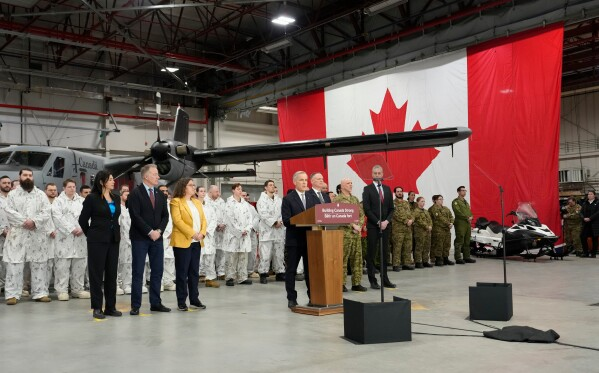
More than 2,000 companies have already filed lawsuits to recover what they paid. The list includes major American names like FedEx, Costco, and Revlon, all of which have turned to the Court of International Trade for relief. FedEx was the first major corporation to sue for a full refund, a move that made clear large businesses are not waiting for the government to act on its own goodwill.
Federal Judge Richard Eaton of the Court of International Trade has already ruled that U.S. importers subjected to the struck-down tariffs are entitled to refunds. His ruling suggested that even companies that have not yet filed lawsuits could be eligible to collect. The question is no longer whether refunds will happen. The question is how fast the government can build a system to pay them out.
U.S. Customs and Border Protection has outlined a framework for how that process will work. Under the plan, importers will file an electronic declaration detailing what they paid. CBP’s ACE computer system will then review those claims and process refund payments with interest, all going through the Treasury Department. “CBP is making all possible efforts to have this new ACE functionality ready for use in 45 days,” the agency said in its court filing.
There is still a significant catch. CBP says it cannot automatically push refund payments out to importers. Each business must first submit a formal request. The agency told the court that automatic refunds, without importers initiating a claim, are simply not something it has the capacity to do right now.
The political reaction has been sharp and direct. Senator Elizabeth Warren of Massachusetts wrote directly to President Trump demanding that the administration return every dollar it collected illegally. “If your administration is successful in its campaign to avoid paying back illegally collected tariffs, it would amount to a theft in broad daylight from each and every American family that has paid the price,” Warren wrote.
Democrats are framing the refund fight as a core economic fairness issue, and with elections ahead, the administration’s resistance to repaying American businesses and consumers is quickly becoming a political problem that shows no sign of getting smaller.
The White House is not sitting still, either. The Trump administration has launched a new round of Section 301 trade investigations targeting 16 major trading partners, including China, the European Union, Japan, India, and Mexico. A separate investigation covers more than 60 countries over goods allegedly produced with forced labor. Section 301 of the Trade Act of 1974 allows the president to impose tariffs on countries found to be discriminating against U.S. firms, and the administration is clearly using this legal pathway to rebuild the tariff system the Supreme Court dismantled.
On top of that, Trump’s 10% global tariff imposed under Section 122 of the Trade Act is being eyed for a jump to 15%. Treasury Secretary Scott Bessent has signaled the increase could arrive soon. “It’s my strong belief that the tariff rates will be back to their old rate within five months,” Bessent said. A group of states has already announced plans to challenge these new tariffs in court, arguing Trump does not have the legal authority to use Section 122 in this way.
Trade lawyers are frank about where things stand. As attorney Siddartha Rao put it, “It’s not like there’s over a hundred billion dollars sitting in, you know, in a room somewhere to just cut checks. This is a Treasury problem.” Attorney Neal Katyal, who led the legal team for the small businesses that originally challenged the tariffs, announced his team is moving forward without hesitation and will “be proceeding immediately to get the refunds Americans are owed.”
The courts are moving faster than the Trump administration clearly wanted, and every legal defeat narrows the White House’s options further. The $133 billion refund fight is far from over, but right now, the scoreboard is not looking good for the president.