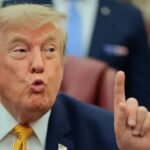

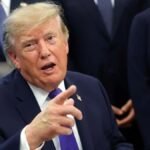

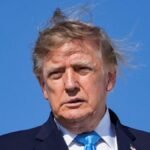

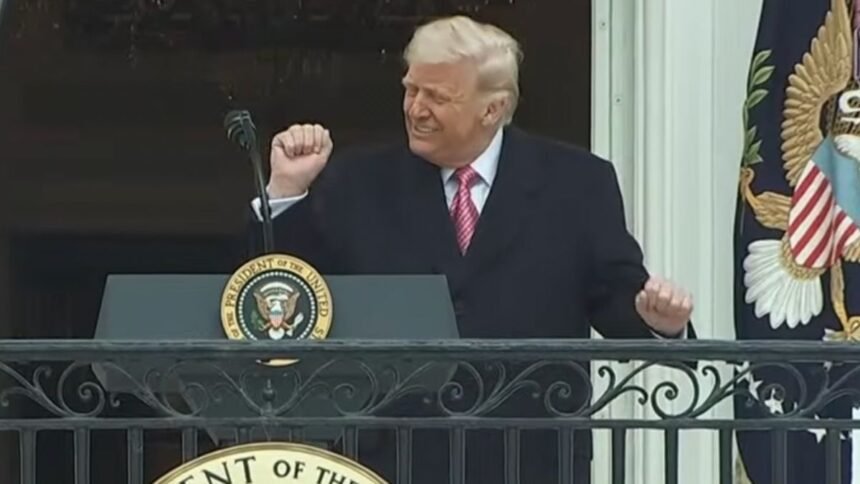
It has become an utter embarrassment that is increasingly difficult to ignore. President Donald Trump’s rapid-fire foreign policy moves are now being watched not just for their global impact, but for how closely they line up with a string of suspiciously well-timed bets that keep winning millions.
The wagers land just before the headlines break. Then they pay off big. What once looked like lucky guesses is now raising serious questions about whether someone with insider knowledge is profiting directly from Trump’s presidency.
The pattern first surfaced during the lead-up to Venezuelan President Nicolás Maduro’s capture. A little-known account placed a heavy bet on the outcome just hours before the news became public.
Months later, it happened again. Trading activity spiked sharply just ahead of a sudden shift in U.S. policy toward Iran, once again raising the same uncomfortable question: who knew first?
In a staff-wide warning sent on March 24, White House officials reminded employees that using government secrets to place bets is a federal crime. The email was a direct response to a growing number of suspiciously successful wagers placed just before major policy announcements.
According to The Wall Street Journal, the message was blunt and unequivocal. “Recent press reports have raised concerns about government officials using nonpublic government information to place wagers on online prediction markets, such as Kalshi or Polymarket,” the email read.
The warning did not stop there. It added that it is a “criminal offense for anyone to use nonpublic information to buy or sell these contracts,” making clear that the administration was aware of the problem.
Market manipulation and insider trading coming out of the White House. https://t.co/JzTZtzI8QT
— Matt Stoller (@matthewstoller) March 24, 2026
The email also stressed that “government ethics regulations prohibit the use of nonpublic information for the private benefit of an employee or any other third party.” It concluded with a firm reminder that “the misuse of nonpublic information by government employees for financial benefit is a very serious offense and will not be tolerated.”
The timing of the warning was not a coincidence. It came just one day after Trump announced he would postpone strikes on Iranian power plants, an announcement that was preceded by a sudden burst of trading activity in oil futures markets.
That sequence has repeated itself enough times to become a pattern. Data shows that more than $760 million in oil futures contracts changed hands in under two minutes, right before one of Trump’s most consequential policy reversals.
On crypto-based prediction platforms like Polymarket, anonymous users have placed high-stakes bets on geopolitical outcomes tied directly to Trump’s decisions. They have won big, again and again.
One of the earliest cases came in January. A newly created account wagered $32,000 that Maduro would be removed from power. Within hours, Trump ordered a military operation that led to Maduro’s capture, and the bettor walked away with more than $400,000.
In another case, a trader using the name “Magamyman” reportedly earned more than $553,000 by betting on outcomes tied to Iran and its leadership. The wins came just before a coordinated U.S.-Israel strike killed Supreme Leader Ayatollah Ali Khamenei. Six additional accounts collectively made $1.2 million betting on that same result.
Even ceasefire deals followed the same suspicious script. More than 50 anonymous accounts placed “Yes” bets on a U.S.-Iran ceasefire shortly before Trump confirmed it on April 7. This happened despite Trump issuing a stark warning just hours earlier that he might destroy Iran’s “whole civilization.”
Absolute bombshell. A prominent journalist exposes how the Trump administration completely dismantled the SEC to protect their own massive insider trading schemes. The White House is operating a corrupt syndicate to profit off the disastrous war in Iran. pic.twitter.com/m7EDYSQrFn
— Furkan Gözükara (@FurkanGozukara) April 3, 2026
There is no confirmed evidence that anyone inside the administration leaked information or acted on insider knowledge. Still, the pattern has proved impossible to shake, especially given that prediction markets allow users to operate completely anonymously while placing large, targeted bets on sensitive global events.
Public reaction was swift and angry. One commenter wrote, “The tone of any business emanates from the top down. Having a lawless, corrupt person at the helm filters down to employees who learn to care less about right and wrong.”
Another commenter questioned whether the problem went beyond White House staff. “Hey! Even if Trump and his family take advantage of these ‘well-timed bets,’ that doesn’t mean his staff gets to do the same. Is that greed, hubris, or what?”
Others went straight at Trump himself. “It is an utter embarrassment that the President of the United States is allowed to blatantly fill his pockets without any consequence,” one post read. “The Trump cryptocurrency may be the most insultingly obvious corruption in recent memory.”
One widely shared reaction captured the scale of what was at stake. “Just five minutes before Trump announced a pause on attacking Iranian energy infrastructure, an anonymous trader placed a massive $1.5 billion bet on the exact move, reaping staggering profits. Who was it? Trump? A family member? A White House staffer? Access is currency, war is profit, and the American people are left holding the bill.”
White House spokesperson Davis Ingle pushed back against the scrutiny. “President Trump has been crystal clear: while he seeks a strong and profitable stock market for everyone, members of Congress and other government officials should be prohibited from using nonpublic information for financial benefit,” Ingle said. He also dismissed the reporting as “baseless and irresponsible.”
The issue has still drawn bipartisan concern on Capitol Hill. More than 55 Democratic lawmakers have called for tighter oversight of prediction markets, and several Republicans have joined them. Proposed legislation would limit or ban outright any betting on military actions.
Connecticut Sen. Richard Blumenthal warned that these platforms “are turning war into a casino game, and creating a market for national security leaks.” New Jersey Sen. Andy Kim added that “corruption and exploitation” are thriving in the regulatory gaps that currently exist.
Federal ethics rules already make the boundaries clear. Government employees are barred from using nonpublic information for personal gain or gambling on government property. But the rapid rise of crypto-based prediction markets, combined with Trump’s high-impact and unpredictable governing style, has created a new gray area where the timing alone keeps raising eyebrows.