







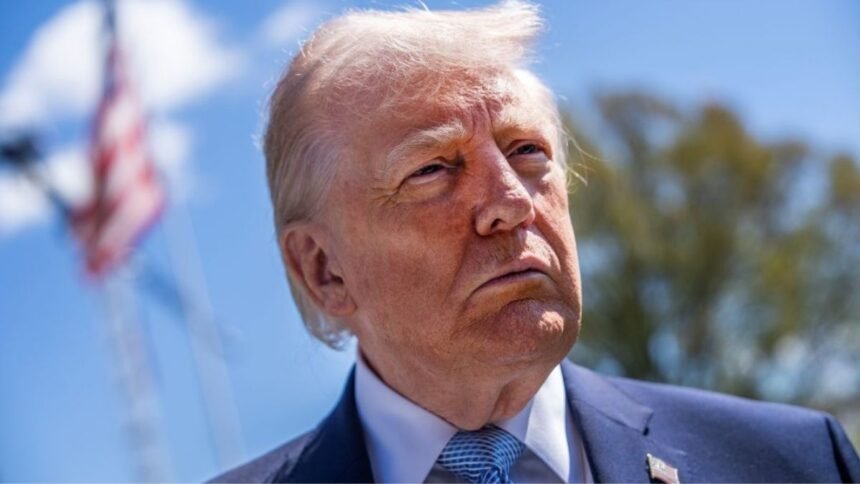
Calls to invoke the 25th Amendment have become a kind of political reflex in America. Opponents of Donald Trump trot it out whenever his rhetoric gets sharp, his behavior seems unconventional, or his decisions spark outrage. The argument, repeated loudly and often, is that this alone should be enough to remove him from office.
Critics call Trump “unfit” or “unstable.” They insist he should be removed, not through elections or even impeachment, but through the Constitution’s emergency mechanism for presidential disability. That position sounds dramatic. It is also completely unconstitutional.
The 25th Amendment was never built for this kind of political disagreement. It was built for a far more serious and specific crisis. Understanding the difference is essential to understanding why the removal argument collapses the moment it is examined closely.
The amendment was ratified in 1967, following the assassination of President John F. Kennedy. Congress wanted a clear legal answer to one frightening question: what happens when a president physically or mentally cannot do the job?
That is the narrow problem the amendment was designed to solve. It was not designed to settle political fights. It was not designed to punish unpopular decision-making or unconventional leadership styles.
Section 4 is the provision that gets the most attention, and the most abuse. It allows the vice president and a majority of the cabinet to formally declare that the president is “unable to discharge the powers and duties of his office.” Once that declaration reaches Congress, the vice president steps in as acting president.
That process sounds powerful on paper. In practice, the bar is extraordinarily high. The amendment was written with that high bar on purpose.
If the president pushes back and contests the declaration, the decision moves to Congress. Both the House and the Senate must then vote, and a two-thirds majority in each chamber is required to remove the president from power. That is not a simple majority. That is a supermajority, and achieving it is nearly impossible in today’s divided political environment.
No president in American history has ever been removed under Section 4. Not once. The provision has existed for over five decades and has never been invoked. That fact alone should signal how serious and rare the circumstances would need to be.
Disagreeing with a president’s policies does not meet that standard. Finding his personality abrasive does not meet that standard. Believing his decisions are reckless or irresponsible does not meet that standard either. The amendment demands genuine, documented incapacity, not political opposition dressed up in constitutional language.
Trump’s critics have pushed this argument repeatedly throughout both of his terms. Legal scholars, including those deeply critical of Trump, have consistently pushed back. The Congressional Research Service has made clear that Section 4 was designed for medical or physical incapacity, not political disagreement.
Using the 25th Amendment as a removal tool against an elected president would itself be a constitutional crisis. It would mean allowing a small group of cabinet officials and a vice president to override the will of millions of American voters. That is not democracy. That is a quiet coup dressed in legal language.
The American political system already has a mechanism for removing a president whose conduct crosses legal or ethical lines. It is called impeachment, and it requires the House to vote, the Senate to hold a trial, and a two-thirds majority to convict. It is difficult by design. So is the 25th Amendment process. Both were made hard to use on purpose.
What Trump’s opponents are really expressing when they call for 25th Amendment removal is frustration. That frustration may be completely genuine. But frustration is not incapacity. Controversy is not disability. And a president who makes decisions you strongly disagree with is not the same as a president who cannot function.
The 25th Amendment is a serious constitutional safeguard. Treating it as a political shortcut does not just misread the law. It cheapens one of the most important protections built into the American system of government.
Continue reading the full analysis at The Daily Wire.