







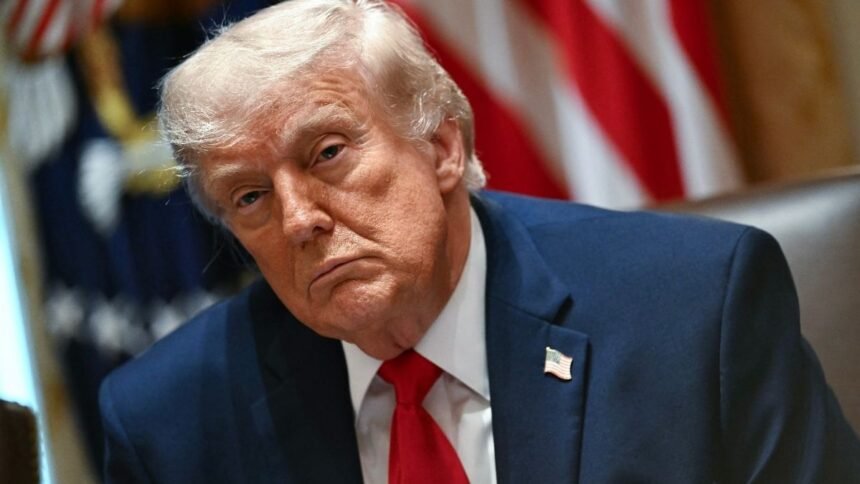
Impeachment is one of the most powerful tools in American politics, and right now, it is closer to becoming reality than most people realize. Donald Trump, the president of the United States, is just one House vote away from being formally impeached, setting the stage for what could become the biggest and most historic trial this country has ever seen.
The Senate has already fully prepared the framework for such a proceeding, one that could permanently end his presidency and bar him from ever holding office again. For millions of Americans watching closely, the question is no longer hypothetical. It is done when the votes are counted.
Most jobs come with the understanding that you can be fired. Whether for a crime, incompetence, or simply bad performance, there is almost always a way out. But what happens when your job is the most powerful position in the country, or arguably in the entire world?
The House needs 1 vote to impeach a president – then the Senate can remove him pic.twitter.com/YhZuWXcluR
— USNewsFeed (@USNewsFeed_) May 30, 2026
That is exactly where impeachment comes in. Impeachment is not the same as removing someone from office. Think of it like an indictment in a criminal case. It is only the formal accusation, the charge that launches a trial, which can then end in either conviction or acquittal.
The concept itself originated in the United Kingdom, where Parliament had the power to vote for removing a government official from office, even without the king’s consent. It was a meaningful check on royal authority. But the king himself could never be impeached, because the monarch was considered the original source of all government power.
America’s founders rejected that idea entirely. They believed no single person stood above accountability. So when they built the U.S. Constitution, they adopted impeachment as a power belonging to Congress, one that could be applied to any civil officer, all the way up to and including the president.
Impeachment proceedings do not begin in the Senate. They begin in the House of Representatives. When a formal accusation is made, the matter is referred to committees, typically the House Committee on Rules and the House Committee on the Judiciary, which review the evidence and decide whether to move forward.
If those committees find enough reason to proceed, the full House votes on each specific charge. These are called Articles of Impeachment. If even one article passes by a simple majority, the official is officially impeached and the case moves to trial.
The trial itself takes place in the Senate. Members of the House, known as managers, act as prosecutors. The impeached official and their legal team present a defense. The Senate serves as both judge and jury throughout the entire process.
When the president or vice president is on trial, the Chief Justice of the Supreme Court presides over the proceedings. This is not a political theater moment. It is a constitutionally defined legal process with enormous consequences.
Conviction in the Senate requires a supermajority, meaning two-thirds of senators must vote guilty. If that threshold is met, the official is automatically removed from office. They can also be permanently disqualified from holding any future federal office, and depending on the charges, they may face standard criminal prosecution afterward.
But what actually qualifies as grounds for impeachment? The Constitution is both specific and vague at the same time. It limits impeachment to cases involving treason, bribery, or other high crimes and misdemeanors.
That phrase, “high crimes and misdemeanors,” has been debated by legal scholars for generations. It is intentionally broad, which leaves significant room for political interpretation. But the general understanding is that it applies to serious abuses of power, not minor policy disagreements or personal misconduct unrelated to office.
The first official ever impeached in American history was William Blount in 1797, after he conspired with Britain to seize the Spanish colony of Louisiana. Since then, the House has launched roughly 60 impeachment investigations, but only 19 of those have resulted in actual impeachment proceedings.
Of those, eight ended in conviction and removal from office. All eight involved federal judges. Impeachment of a sitting president remains extraordinarily rare.
Andrew Johnson was impeached in 1868 for attempting to remove his Secretary of War without Senate approval. More than a century later, Bill Clinton was impeached in 1998 for making false statements under oath during a sexual harassment lawsuit.
Both were ultimately acquitted. The Senate’s votes to convict fell short of the two-thirds threshold required for removal. And contrary to what many people believe, Richard Nixon was never impeached. He resigned before it could happen, fully aware that conviction was nearly certain.
Today, with H.Res.939 already introduced and charging Trump with two articles of impeachment, including abuse of presidential power, the constitutional machinery is already in motion. Representative Al Green filed the resolution, and the Senate has made clear it understands exactly what a trial of this magnitude would require.
The American system of government was designed with safeguards built in from the start. Checks and balances, term limits, and free elections are all meant to prevent abuses of power before they spiral out of control. Impeachment, however, was designed for the moments when those safeguards are not enough.
It is the emergency brake. And right now, the question gripping Washington is whether anyone has the will to pull it.