







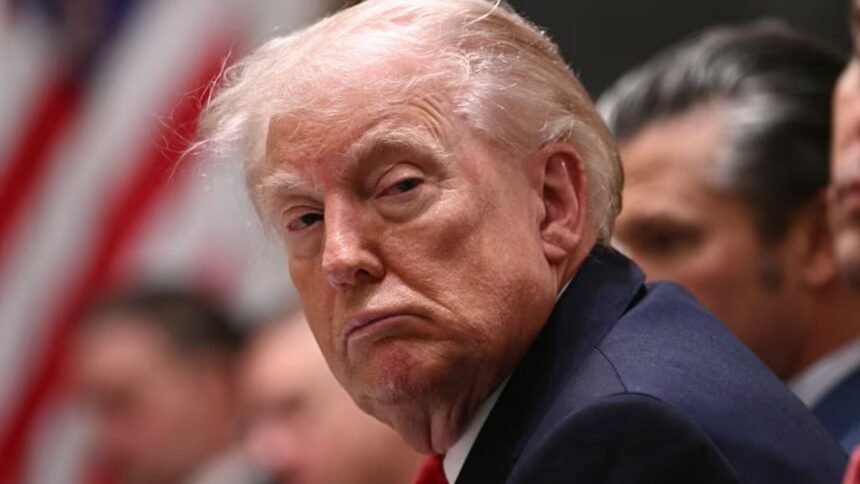
A federal judge handed President Donald Trump another major court loss on Friday, ruling that he cannot slap his name on the Kennedy Center for the Performing Arts. The decision also blocked his administration’s plan to shut the historic Washington venue down for two years of large-scale renovation. It was a sweeping rebuke that struck at the heart of Trump’s ambition to leave a personal mark on the cultural landmarks of the nation’s capital.
The ruling came from U.S. District Judge Christopher Cooper of the Federal District Court in Washington, D.C. In a 94-page legal opinion, Judge Cooper made one thing unmistakably clear: Congress gave the Kennedy Center its name back in 1964, and only Congress has the legal authority to change it. No board vote, no presidential directive, and no administrative maneuver can override that basic fact.
Trump did not take the court loss quietly or gracefully.
Within hours of the ruling, the president fired off a nearly 600-word rant on Truth Social, announcing he was walking away from the entire renovation project. “Unless I am free to do what I do better than anyone else, bring this Institution back, physically, financially, and artistically, I have no interest in continuing what could only be a hopeless journey into ‘NEVER NEVER LAND,’” Trump wrote. It was a dramatic retreat dressed up in the language of defiance.
He then aimed his anger directly at the judge himself. “Unfortunately, Judge Cooper and the Radical Left would rather see it DIE than have President Trump transform it into something that everyone could be proud of,” he continued in the same post. Trump also called on Judge Cooper to “be ashamed of himself,” a striking personal attack on a sitting federal judge.
The legal dispute traces back to December, when the Kennedy Center’s Board of Trustees voted unanimously to rename the performing arts venue “The Trump Kennedy Center.” That board had been stacked with Trump loyalists and appointees, including former Attorney General Pam Bondi and Sergio Gor, the U.S. Ambassador to India. The board had also elected Trump himself as its chairman.
A judge ruled Friday that the board had overstepped its legal authority by making that name change without approval from Congress. He wrote in his opinion that “Congress deliberately rechristened the ‘National Cultural Center’ the ‘John F. Kennedy Center for the Performing Arts’” in 1964. The text of that founding law, the judge said, made the institution’s legally protected name “abundantly clear.”
“May the John F. Kennedy Center for the Performing Arts be renamed absent Congressional authorization?” Cooper asked in his ruling. “The answer, plain from the face of the statute, is no.” He also ordered that Trump’s name must be removed from the building’s facade and all official signage within two weeks.
The lawsuit that triggered this ruling was filed by Rep. Joyce Beatty, a Democrat from Ohio who serves as an ex officio member of the Kennedy Center’s board. She argued that her voting rights as a board member were illegally stripped in 2025 when the center’s bylaws were quietly amended to make certain positions non-voting. Judge Cooper ruled squarely in her favor on that claim.
Beatty was direct in her response to the ruling. “The Kennedy Center is an institution that belongs to the American people, not to Donald Trump,” she said in a statement. “He has desecrated this sacred memorial for his own vanity. I am proud to have fought for the rule of law and to protect this sacred institution.”
Friday’s ruling also halted Trump’s March announcement that the center would close on July 4th, 2026, to begin a sweeping renovation overhaul. Cooper found that the board’s March 16 vote to close the facility was “ill-informed and seemingly preordained,” with no real consideration of the center’s legal obligations. He noted that none of the board’s own reports or external assessments had actually called for a complete two-year closure.
Instead, Cooper pointed out, the renovations could have been carried out in phases while the building remained open and serving the public. The Kennedy Center has been running a slower performance schedule in anticipation of the planned closure. Upcoming shows include “Moulin Rouge” in June, and comedian Bill Maher is set to receive the prestigious Mark Twain Prize for American Humor on June 28.
The Trump administration had secured $257 million from Congress for the renovation project. Despite the court loss, Kennedy Center spokesperson Roma Daravi said the institution is “confident that on appeal the court will uphold the Board’s will to recognize President Trump’s historic contributions to our nation’s cultural center.” The administration is widely expected to challenge the ruling at a higher court.
Trump, for his part, announced Friday that his administration is now “working with Congress to transfer this failing Institution back to them so they can make a determination as to what to do with it.” It was a striking exit from a project he had championed loudly and publicly for months. Whether that transfer actually happens remains to be seen.
This is far from the first time courts have blocked Trump’s effort to reshape the physical identity of Washington, D.C. He demolished part of the White House East Wing to build a ballroom, added his name and image to the Justice Department headquarters, and has pushed for a triumphal arch overlooking the Potomac River. Judges have repeatedly intervened, though district court rulings are rarely the final word.
The John F. Kennedy Center for the Performing Arts, which opened in 1971 as a living national memorial to the assassinated president, will keep its name for now. Whether that holds after an appeal is a question that will play out in a higher court. For the moment, one of Washington’s most iconic cultural institutions has survived another attempt to transform it into a political trophy.