








Survivors of Jeffrey Epstein and several lawmakers are demanding the release of sealed federal records. They say the U.S. Department of Justice is protecting powerful people by refusing to make the files public.
The call comes after the Justice Department said in July 2025 it had finished its review. Officials said they found no client list and would not make more disclosures.
That announcement did not stop questions. Instead, it fueled more doubts about whether investigators avoided exposing politicians, business leaders, and other high-level contacts linked to Epstein’s network. Survivors believe transparency is overdue.
At a press conference on Capitol Hill, survivors insisted that hiding information was a second betrayal. One woman identified herself as a Republican, rejecting claims that the demands were part of a Democrat “hoax.”
Donald Trump dismissed the calls, labeling the scandal a “Democrat hoax that never ends.” Survivors said his remark was insulting, since their claims and trauma are not partisan matters.
Representative Thomas Massie, a Kentucky Republican, filed a discharge petition to force a House vote on releasing Epstein’s files. The petition would need 218 votes, including support from some Republicans.
All 212 House Democrats are expected to sign. Four Republicans have already joined, including Massie, Nancy Mace, Lauren Boebert, and Marjorie Taylor Greene. Six more signatures would bring it to the floor.
The White House responded sharply. Officials said Republicans who signed the petition were carrying out a “hostile act.” Survivors argued the real hostility was keeping information buried and denying them closure.
Former prosecutor Joyce White Vance noted that normal rules about case files do not apply here. She said Epstein is dead, so there will never be a trial to reveal the evidence.
Lawyers for survivors added that some files could be redacted to protect private details. But they said the public still deserves access to records showing who enabled Epstein’s crimes.
One of the most striking claims came from survivor Lisa Phillips. She announced that survivors themselves will now compile a confidential list of Epstein’s clients, based on their own experiences.
“We know the names,” she told reporters. “Many of us were abused by them. Together as survivors, we will build our own list, by survivors and for survivors.”
The Justice Department has defended its refusal to release further records. Officials argued that raw evidence, including videos and photographs, could retraumatize victims if published without strong safeguards.
But critics believe the secrecy only protects the powerful. Dan Bongino, Deputy FBI Director and former podcaster, reportedly considered resigning after internal disagreements over how the files were handled.
This week, Congress released thousands of pages that leaders said addressed public concern. Survivors quickly called it a “charade,” noting the release contained little new information or evidence that identified Epstein’s contacts.
Some lawyers pointed to flight records, transaction logs, and even home surveillance tapes as critical evidence. They said these files could reveal who visited Epstein and who paid money linked to his schemes.
For many survivors, Epstein’s death in prison robbed them of justice through trial. They now see the files as one of the few remaining paths to truth and accountability.
Oversight attention has also returned to Alex Acosta, the former U.S. Attorney who approved Epstein’s 2008 plea deal. Acosta is scheduled to testify before the House Oversight Committee on September 19.
Lawmakers argue that secrecy has stretched across decades, starting with that plea deal. They say the only way to repair trust is to open the records fully to congressional review and the public.
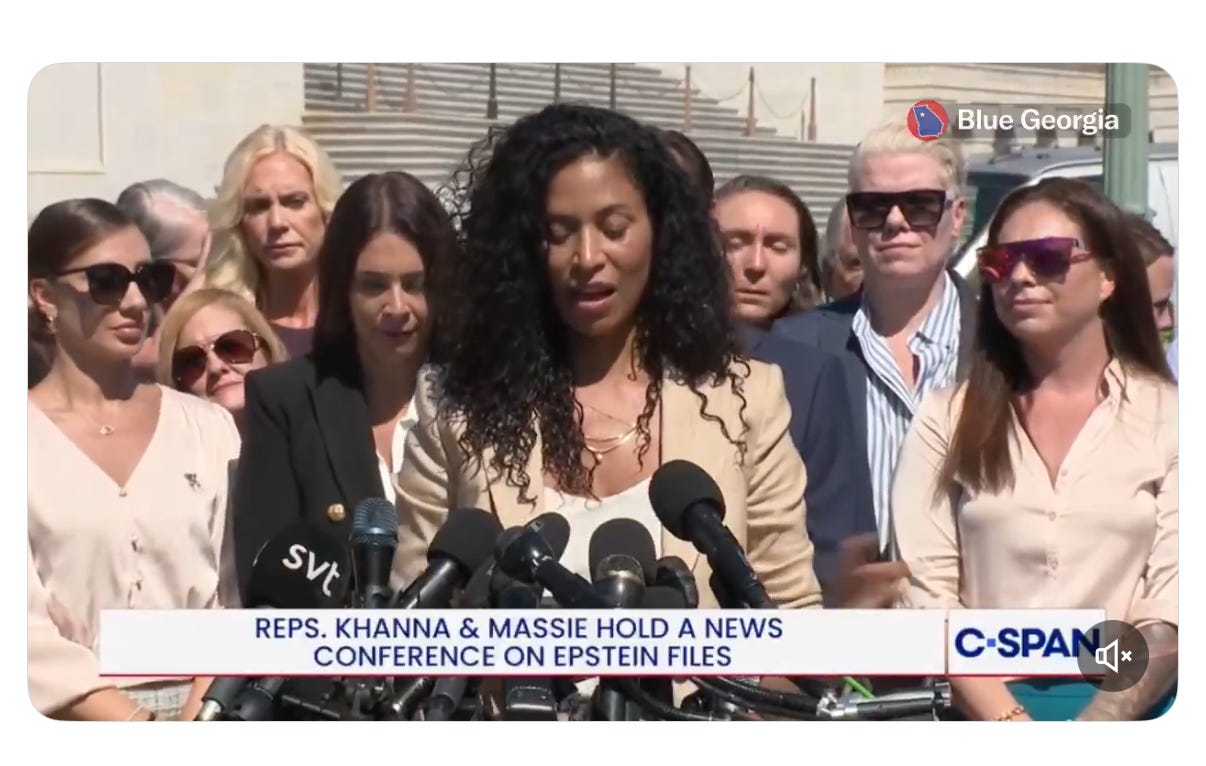
Pressure is building both inside and outside Congress. If the discharge petition succeeds, the House would be forced to vote on a bill ordering the Justice Department to release nearly all Epstein files.
Legal experts note that courts may still require redactions, especially to protect victims and minors. Even so, many argue that enough can be released to shed light on the case.
Survivors have been threatened in the past, but they now say strength in numbers is protecting them. Organizing together, they plan to push harder for full disclosure in the weeks ahead.
[inline_related_posts title=”RECOMMENDED” title_align=”left” style=”list” number=”1″ align=”none” ids=”” by=”primary_cat” orderby=”rand” order=”DESC” hide_thumb=”no” thumb_right=”no” views=”no” date=”yes” grid_columns=”2″ post_type=”” tax=””]
Public opinion is also shifting. Many people online argue that hiding files only deepens suspicion. The phrase “Release the Epstein Files” has become a rallying cry across political divides.
For survivors, the issue is personal, not political. They say every delay is another reminder of injustice. Their fight is now as much about memory as it is about accountability. Read the full article here.